
Asbestos Dust: Release of 2024 Figures
Asbestos dust concentration refers to the concentration of asbestos fibers in the air, expressed in fibers per liter (f/L). This indicator is key to assessing exposure among the population (building occupants, nearby residents, workers, etc.).
In February 2026, the Directorate General for Health (DGS) published a national summary of measurements conducted in 2024 by accredited laboratories. The objective is to provide an overview of the dust levels measured in France.
1. A robust and well-structured national database
The data comes from Cofrac-accredited laboratories (LAB REF 26 and LAB REF 28 programs), which submit an annual report via the SI-Amiante platform.
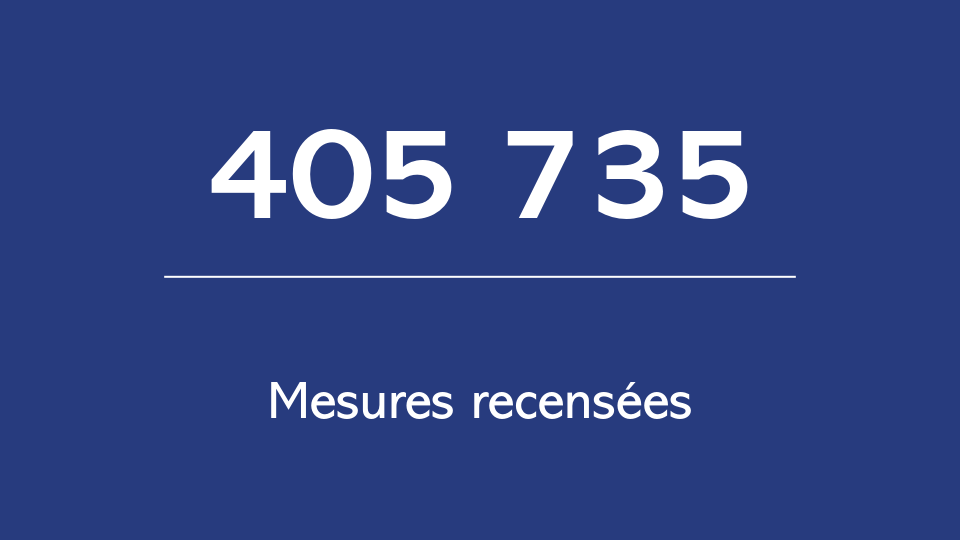
✔️ A total of 405,735 measures recorded in 2024
✔️ 151 laboratories involved
✔️ 135 reports submitted (89%)
✔️ 109 actionable reports after removing duplicates
These data provide an important basis for monitoring national trends in asbestos exposure.
2. Dust levels observed in 2024
⚠️ Key takeaway
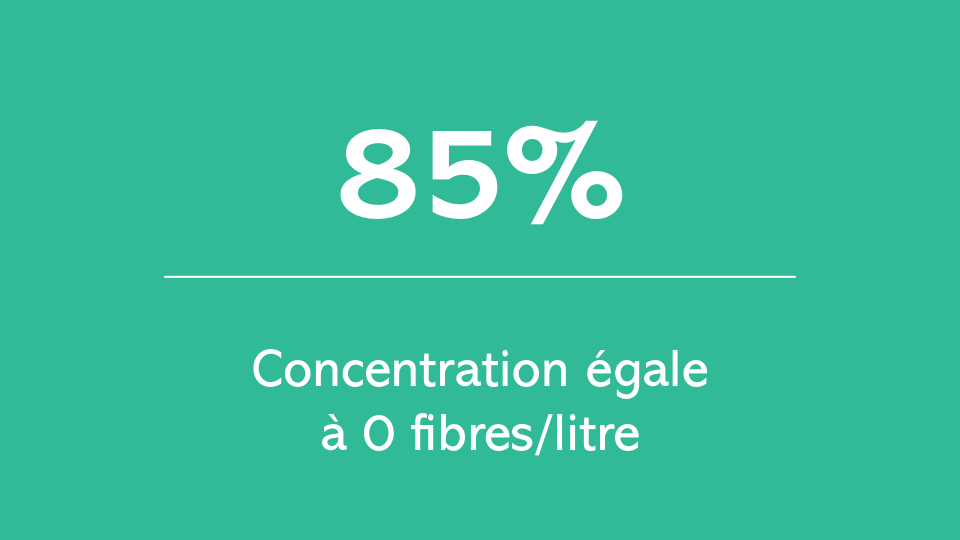
- 85% have an estimated concentration of 0 f/L (346,615 measurements)
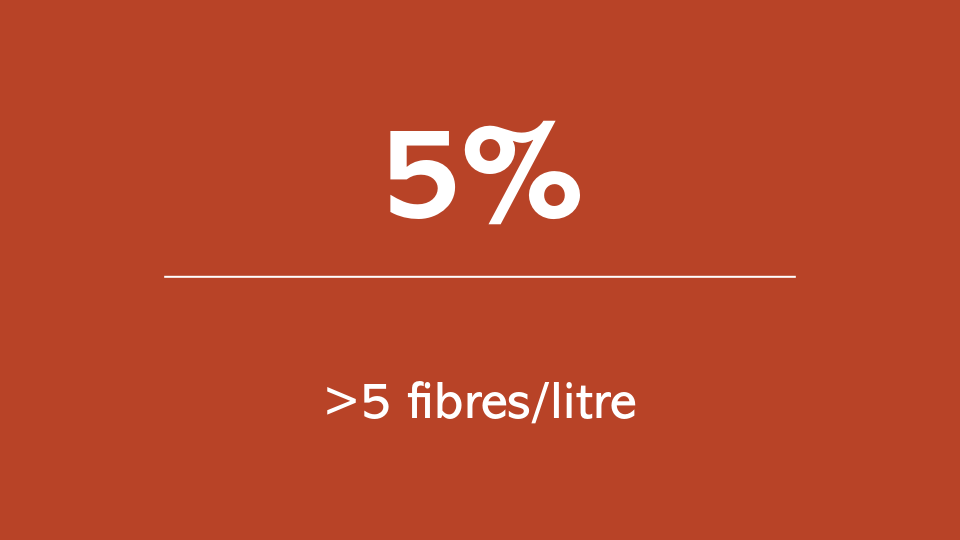
- 5% exceed the threshold of 5 f/L (18,815 measurements)
Selon la catégorie de lieux ou de bâtiments, ce pourcentage varie entre 1 % et 11 %.
La majorité des résultats se situe donc dans les classes les plus basses (0 f/L, <1, 1–2, 2–5, >5).
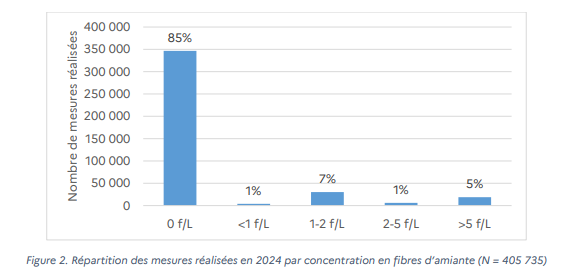
Source: Ministry of Health – Asbestos dust data for 2024
What does “0 f/L” mean?
In an analytical report, a value of 0 f/L generally means that no fibers were detected under the sampling and analysis conditions.
In most cases, this result indicates a concentration below the method’s detection limit, rather than an absolute absence of fibers in the air.
3. The 5 f/L threshold in the regulations
The Public Health Code (Article R.1334-28) sets a management threshold of 5 fibers per liter of air (5 f/L).
🏢 In buildings
When this threshold is exceeded in a building containing materials listed in List A (spray-applied materials, insulation, suspended ceilings), the owner must implement appropriate management measures, which may include removal or containment work.
🚧 Asbestos removal project
During the work, exceeding this threshold may lead to the implementation of corrective measures and adjustments to the project organization in order to control fiber emissions.
4. Background of the measures implemented
A significant portion of the measures identified are carried out in a professional setting, particularly during projects involving the removal or containment of materials containing asbestos.
Among the measurements exceeding 5 f/L, a significant proportion pertain to:
- Environmental measurements taken during construction, with 16,043 instances of exceedances recorded.
In addition:
- 22% of environmental measurements taken in homes during construction projects exceed 5 f/L.
These results are observed in situations where materials are handled or removed, which can lead to a temporary increase in fiber emissions.
5. Distribution of measurement locations
Distribution of sites
Residential buildings account for more than a third of the taxes collected.
If we also include workplaces, these categories account for more than 80% of the measurements taken.
Measurements taken outdoors (roads, natural sites, etc.) remain relatively underrepresented in the available data.
Finally,educational institutions and childcare facilities account for about 11% of the monitoring sites.
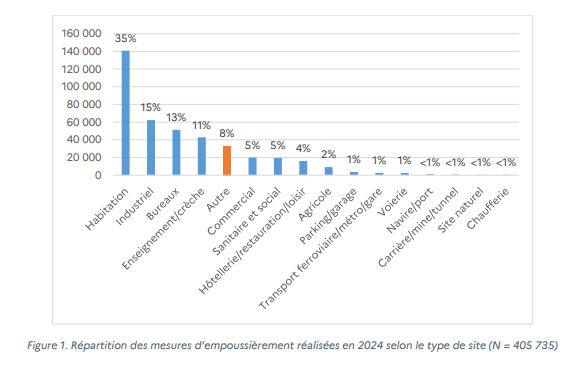
Source: Ministry of Health – Asbestos dust data for 2024
6. Most frequently mentioned materials
Among the materials and manufactured products containing asbestos, the most frequently cited in the data are:
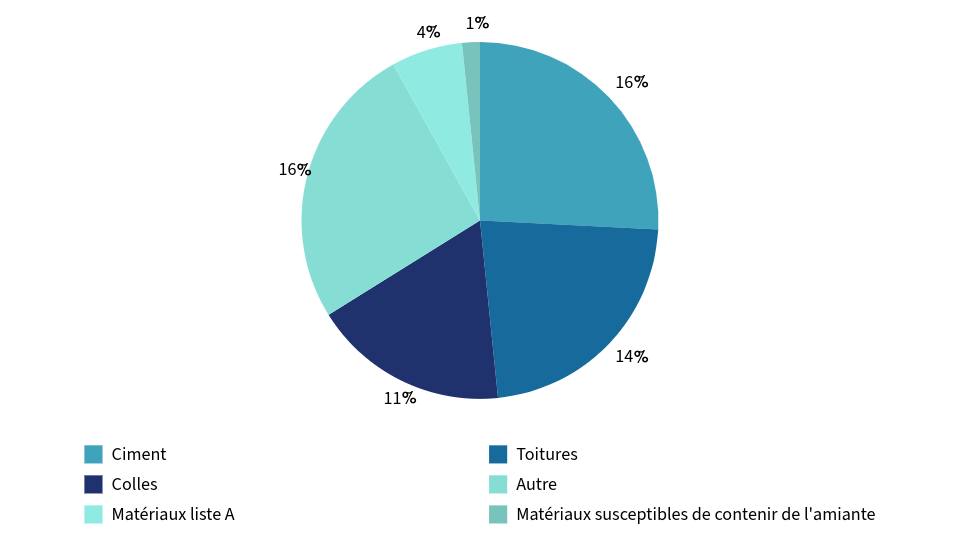
The “other” category accounts for 16%, reflecting the diversity of the materials in question.
Materials in List A (sprayed coatings, insulation, suspended ceilings) account for approximately 4% of the materials reported in the analyzed data.
Materials likely to contain naturally occurring asbestos (soil, rock, road surfacing, etc.) account for a limited share of the recorded measurements, on the order of 1%.
7. Materials associated with levels exceeding 5 f/L
The data show variability across material categories. List A materials account for between 2% and 4% of exceedances. List B materials account for between 2% and 9%.
Certain categories account for a higher proportion of the observed exceedances:
- Roadways: 21%
- Road surfacing: 25%
- Friction components: 31%
However, the number of measures associated with these categories remains relatively limited:
- Road traffic: 2,829 measurements
- Road pavements: 644 measurements
- Friction components: 1,451 measurements
8. Risk Management in Operations Involving Asbestos-Containing Materials
Before construction begins
- Conduct or update an asbestos survey
- Develop an appropriate management strategy based on the condition of the materials and the context of the project.
Under construction
- Implement the necessary measures to control fiber emissions, including:
- Management of Adjacent Areas
- Layout of the access airlocks
- Establishment of decontamination zones
After renovation
- Carry out the measures required by regulations, including:
- Initial restitution measures
- Inspections upon project completion
- any additional measures
depending on the context
Conclusion
In 2024, 405,735 asbestos dust measurements were recorded in France.
The majority of results were at low levels (85% at 0 f/L), while 5% of measurements exceeded the 5 f/L threshold, mainly in construction settings.
These data provide an overview of the observed dust levels, while noting that the interpretation of a measurement always depends on its context: type of site, nature of the materials, phase of construction, and sampling conditions.
❓FAQ – Asbestos Dust
What is the purpose of an asbestos dust measurement?
It allows for the assessment of asbestos fiber concentrations in the air in order to evaluate the level of exposure and adjust management measures accordingly.
What does the 5 f/L threshold represent?
A regulatory management threshold. On a construction site, exceeding this threshold may result in a work stoppage and corrective actions.
Why do we see speeding mainly during roadwork?
This is a regulatory management threshold used as a benchmark to trigger certain actions in buildings or during construction work.